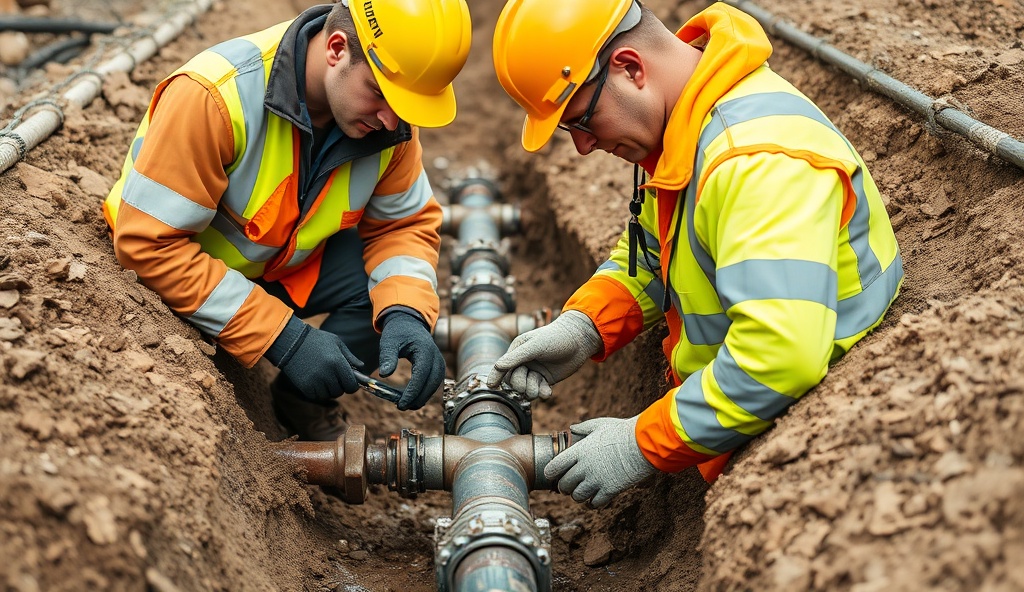
Infrastructure resilience isn't a future concept. It's built through better design, smarter monitoring, and partnership that strengthens every connection point in the systems that keep communities functioning.
Infrastructure resilience means systems that continue functioning under stress—that absorb shocks, adapt to change, and recover quickly from disruptions. It means systems that remain affordable to operate and maintain, even as demands increase and conditions change. It means systems that keep essential services flowing: water, gas, electricity, and the thousand daily functions communities depend on.
Resilient infrastructure starts with design that anticipates failure, monitors condition, and enables rapid response. It means stronger connections, better materials, and smarter verification at the points where leaks and failures most often occur.
True resilience is tested when systems face stress: extreme weather, aging, population growth, or scarcity. Systems built with better materials and stronger design points don't merely survive—they maintain performance and affordability through volatile conditions.
Aging water systems face growing pressure. Resilient systems withstand these pressures by reducing loss and preventing cascading failures.
Gas systems require absolute reliability and safety. Resilient gas systems eliminate unnecessary risk and cost.
Resilience includes financial stability—systems that remain affordable to operate and maintain long-term.
Systems designed to reduce failure points, support monitoring, and enable verification are fundamentally more resilient than systems designed only for initial cost.
Installation verification that confirms proper seating, pressure testing that confirms integrity, and early detection of degradation all contribute to resilience.
Systems that monitor condition in real time enable maintenance teams to respond to small issues before they become cascading failures.
When operators and maintenance teams trust system condition and design, they can make more informed decisions about repair and replacement timing.
Systems that work reliably, fail rarely, and maintain affordability earn public trust—essential for water conservation and political support for infrastructure investment.
Resilience scales when better standards become industry norms—built into procurement, specifications, and operations across utilities and regions.
One of the most misunderstood aspects of infrastructure is that resilience and affordability are often treated as opposites. In reality, they're inseparable. Systems that fail often become very expensive. Systems that leak, break, and require emergency repair drain budgets faster than planned, predictable maintenance.
Resilient infrastructure is affordable infrastructure. It costs less to maintain. It fails less often. It enables better planning. And it remains accessible to households struggling with rising utility bills.
This is why SolidMelt's value proposition centers on total cost of ownership. Not just the price of a connection point, but the total cost—installation, verification, maintenance, failures avoided, emergency response reduced, water preserved, and operations streamlined.
Resilient systems that are also more affordable don't exist by accident. They're built by partner organizations that align around shared outcomes, shared costs, and shared benefits.
Interested in learning how resilient infrastructure design can improve your systems' performance while lowering costs? Let's discuss what's possible for your organization.
Get in Touch